Disclosure: This post contains affiliate links. We may earn a commission if you purchase through our links, at no extra cost to you.
If you've been struggling to eat healthy during a busy week, easy meal prep for weight loss might be the single most effective habit you can build in 2026. Spending a few focused hours in the kitchen on Sunday can save you three or more hours during the week, eliminate impulsive fast-food decisions, and keep your calorie intake firmly under control. This guide walks you through everything you need to know — from beginner-friendly ideas to storage tips and high-protein recipes — so you can start losing weight without feeling overwhelmed.
What Is Meal Prep and Why Does It Work for Weight Loss?
Meal prepping means cooking and portioning your meals in advance — typically for three to five days at a time. Instead of deciding what to eat when you're already hungry, you open the fridge and grab a ready-made, calorie-controlled meal. That one small shift changes everything.
According to the USDA's MyPlate guidelines, building meals around lean proteins, whole grains, and plenty of vegetables is the foundation of healthy weight management. Meal prep makes it dramatically easier to hit those targets every single day.
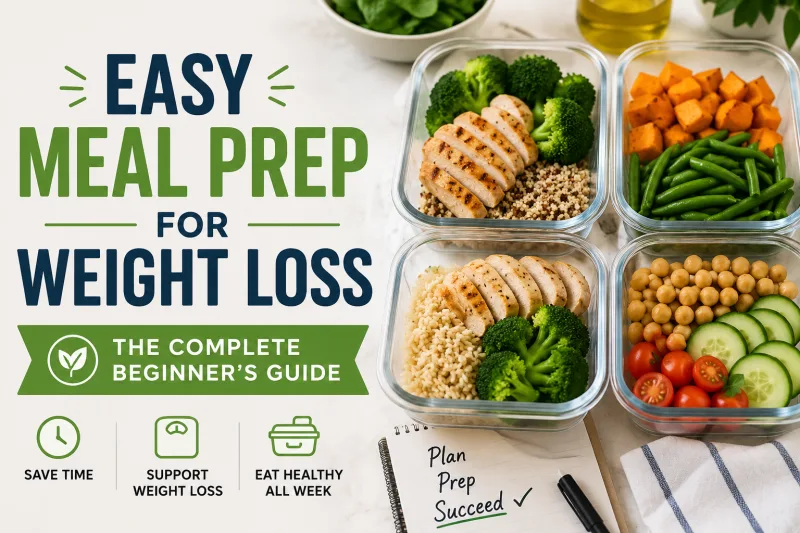
In Easy Meal Prep for Weight Loss, research consistently shows that people who plan their meals in advance consume fewer calories, eat more nutritious food, and are less likely to abandon their goals midweek. It's not a diet — it's a system.
Benefits of Prepping Your Meals for Weight Loss
- Portion control: You decide serving sizes when you're calm and rational, not when you're starving at 6 p.m.
- Lower calorie intake: Home-prepped meals typically come in under 400–500 calories per serving, compared to 800+ calories in many restaurant meals.
- Saves money: Most people save $50–$100 per week by cooking at home instead of ordering out.
- Reduces stress: Knowing exactly what you're eating removes daily decision fatigue.
- Supports consistency: Consistency is the #1 driver of sustainable weight loss results.
June is actually one of the best months to start, because seasonal produce like zucchini, cucumber, berries, and corn is fresh, affordable, and packed with nutrients.
How to Start Easy Meal Prep for Weight Loss (Step-by-Step)
If you're a beginner, the process can feel daunting. Break it down into five simple steps and it becomes very manageable.
Step 1: Choose Your Prep Day
Sunday is the most popular choice, but any day works. Block off two to three hours and treat it like an appointment. Many people also do a mid-week mini-prep on Wednesday to keep meals fresh.
Step 2: Plan Your Meals for the Week
Decide on breakfast, lunch, dinner, and one or two snacks for five days. Aim for simple, repeatable meals built around a protein source, a complex carbohydrate, and a vegetable. Download a free weekly meal plan PDF to make this step even faster — you'll find one in our resource library on this site.
Step 3: Write a Targeted Grocery List
Shop with a specific list and stick to it. This prevents impulse buys and ensures you have everything you need before you start cooking. Keep staples like olive oil, brown rice, canned chickpeas, and frozen edamame on hand at all times.
Step 4: Cook in Batches
Cook proteins in large batches — roast a full sheet pan of chicken thighs, boil a dozen eggs, or cook two cups of dry quinoa at once. While proteins cook, chop your vegetables and prep your sauces. This parallel approach cuts your total kitchen time significantly.
Step 5: Portion and Store
Divide everything into individual portions using quality meal prep containers. Glass containers with locking lids are ideal because they're microwave-safe, leak-proof, and help you see exactly what's inside at a glance.
Simple High-Protein Meal Ideas to Get You Started
The best weekly prep focuses on high-protein, low-calorie combinations that keep you full for hours. Here are five practical meal ideas built around ingredients that are peak-season in June:
- Grilled chicken and quinoa bowls with roasted zucchini and a lemon-tahini drizzle (~420 calories)
- Turkey and black bean lettuce wraps with sliced cucumber and salsa (~310 calories)
- Hard-boiled eggs with overnight oats topped with fresh blueberries (~370 calories for the pair)
- Sheet pan salmon with asparagus and brown rice (~450 calories)
- Greek yogurt parfaits layered with strawberries and low-sugar granola (~290 calories)
Each of these recipes takes under 30 minutes of active prep time and stores beautifully in the fridge for up to four days. They're also naturally portion-controlled, making calorie tracking straightforward.
Tips for Beginners: Keep It Simple and Sustainable
The biggest mistake beginners make is trying to prep too many different meals at once. Start with just two or three recipes per week. Master those, then expand your rotation gradually.
- Use a slow cooker or Instant Pot to speed up batch cooking dramatically.
- Pre-wash and chop raw vegetables as soon as you get home from the grocery store.
- Label every container with the meal name and date using masking tape and a marker.
- Track your meals with a nutrition app to stay accountable to your daily calorie and protein goals.
- Keep snack-size portions of nuts, cut fruit, and hummus ready so you're never caught off guard.
Tracking your nutrition doesn't need to be complicated. Even logging meals for just two weeks gives you powerful insight into where your extra calories are coming from.
How to Store Your Prepped Meals Safely
Proper storage is non-negotiable for food safety and meal quality. Follow these quick rules to keep everything fresh all week long.
- Refrigerator shelf life: Most cooked meals last four to five days in the fridge. Seafood dishes should be eaten within three days.
- Freezer shelf life: Soups, stews, cooked grains, and casseroles freeze well for up to three months. Use freezer-safe containers and label with the date.
- Container choice: BPA-free glass or high-quality BPA-free plastic containers work best. Divided containers are especially useful for keeping ingredients like dressings and sauces separate until serving time.
Never store hot food directly in sealed containers — let it cool for 20–30 minutes first to prevent condensation and bacterial growth. Keep your fridge at or below 40°F at all times.
Nutritional Targets to Aim For
A healthy weight loss meal should typically fall between 350 and 500 calories, with at least 25–35 grams of protein, 40–50 grams of complex carbohydrates, and plenty of fiber. These numbers keep you satiated, preserve muscle mass during fat loss, and give your body steady energy throughout the day.
For most adults targeting weight loss, a daily intake between 1,400 and 1,800 calories works well — but individual needs vary based on height, weight, activity level, and age. A registered dietitian can give you a personalized target if you're unsure where to start.
Common Mistakes to Avoid
- Prepping too much variety at once and burning out after one week
- Forgetting to include healthy fats, which leads to hunger and cravings
- Skipping breakfast prep — morning hunger is where many people fall off track
- Using low-quality containers that leak or aren't microwave-safe
- Not adjusting portions as your weight changes over time
Frequently Asked Questions
What is the best meal prep approach for weight loss?
The best approach combines lean proteins, fiber-rich vegetables, and complex carbs in portioned containers. Focus on simple, repeatable recipes that you genuinely enjoy eating. Consistency beats perfection every time.
How long do prepped meals last in the fridge?
Most cooked meals stay fresh and safe for four to five days when stored properly in airtight containers at or below 40°F. Seafood-based meals should be consumed within two to three days for best safety and quality.
Can you freeze prepped meals?
Yes — soups, grain bowls, turkey chili, and most casseroles freeze exceptionally well for up to three months. Avoid freezing meals that contain raw leafy greens, dairy-heavy sauces, or hard-boiled eggs, as these don't thaw well.
What are the best ideas for absolute beginners?
Start with overnight oats for breakfast, a simple chicken and rice bowl for lunch, and a sheet pan dinner for the evening meal. These three recipes alone give you a full week of healthy eating with minimal cooking skill required. This beginner-friendly meal prep strategy is low-cost, quick to execute, and highly effective for building momentum early on.
How many calories should a prepped meal contain?
Aim for 350–500 calories per main meal and 100–200 calories per snack. This structure supports most people's weight loss goals while keeping energy levels stable throughout the day.
Final Thoughts
Weekly meal prep is one of the simplest ways to improve your health and support your weight loss goals in 2026. You don't need special cooking skills, expensive ingredients, or hours of preparation. A basic plan and a few go-to recipes can help you stay on track all week.
Start small, stay consistent, and let each prepared meal bring you closer to your goals. Download our free meal plan PDF and get started this Sunday.