
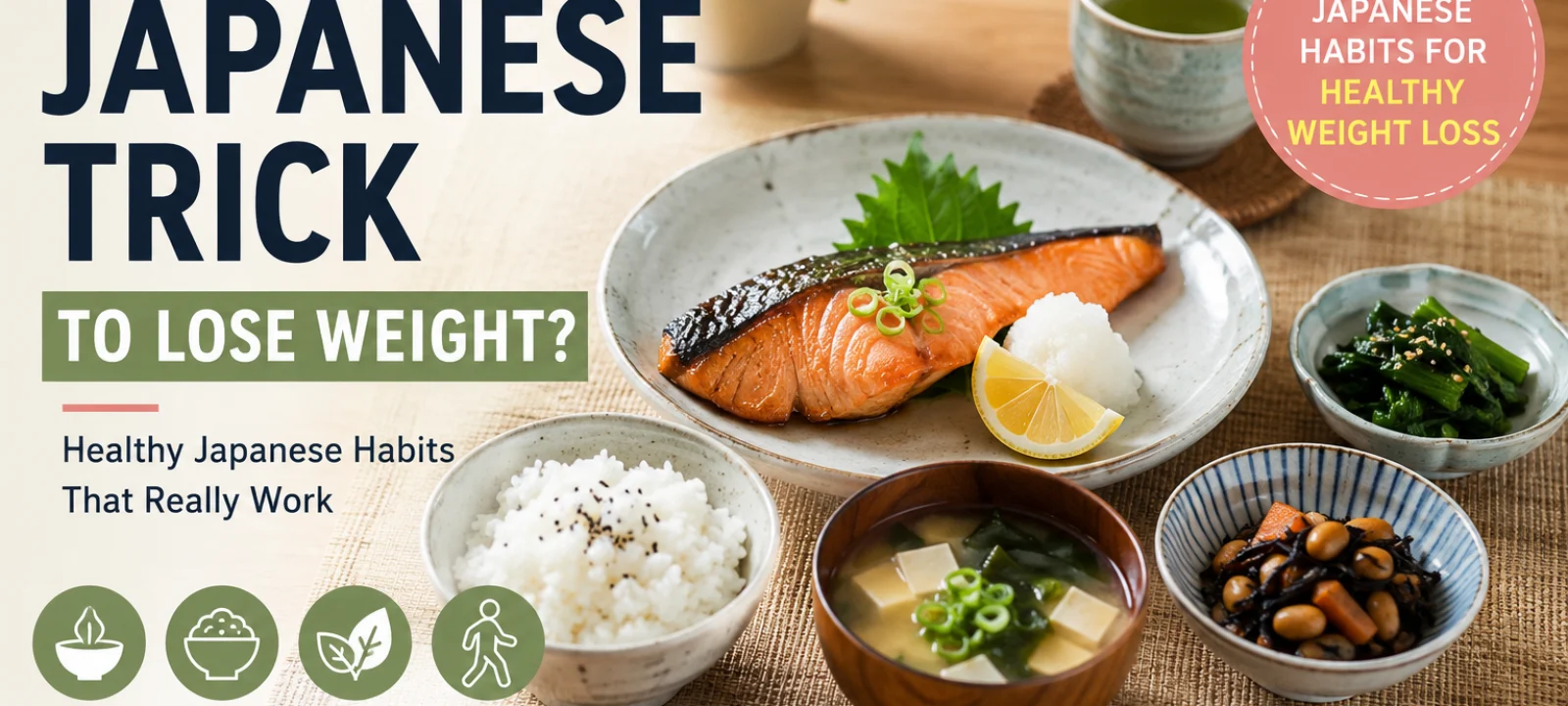
What Is the Japanese Trick to Lose Weight? Simple Japanese Habits for Healthy Weight Loss
Japan is often recognized for having lower obesity rates and a culture that encourages balanced eating habits. While there isn't one secret trick that magically melts fat away, several traditional Japanese habits can support healthy, sustainable weight loss.
Instead of relying on restrictive diets or expensive supplements, many Japanese eating habits focus on portion control, whole foods, mindful eating, and staying physically active. These everyday practices can help reduce overeating, improve satisfaction after meals, and make healthy eating easier to maintain.
Table of Contents
Is There Really a Japanese Weight Loss Trick?
Many people searching "What is the Japanese trick to lose weight?" expect to find one powerful secret. In reality, there isn't a single trick responsible for Japan's healthy lifestyle. Instead, it's the combination of daily habits that makes the biggest difference.
Traditional Japanese eating emphasizes balance rather than restriction. Meals often include vegetables, fish, rice, fermented foods, and moderate portions instead of oversized servings or heavily processed foods. Combined with an active lifestyle, these habits can naturally support a healthy body weight.
The goal isn't perfection. It's developing eating habits that you can maintain consistently for years instead of following short-term diets.
1. Eat Until You're About 80% Full
One of the best-known Japanese habits is Hara Hachi Bu, a traditional practice that encourages people to stop eating when they're about 80% full instead of completely stuffed.
This habit naturally helps reduce calorie intake without requiring strict food rules. Eating slightly less while still feeling satisfied can make weight management easier over time.
- Helps prevent overeating.
- Encourages mindful eating.
- Supports healthy portion control.
- Can improve digestion by avoiding excessively large meals.
Rather than rushing through meals, pay attention to your hunger and fullness signals. You may discover that you need less food than you think to feel satisfied.
2. Eat Slowly and Mindfully
Another answer to "What is the Japanese trick to lose weight?" is slowing down during meals. Eating too quickly can make it harder for your brain to recognize fullness, increasing the chance of overeating.
Many traditional Japanese meals are served in smaller dishes, encouraging people to eat more slowly and appreciate each bite.
- Chew food thoroughly.
- Take smaller bites.
- Avoid eating while watching TV.
- Focus on enjoying your meal.
Even adding an extra 10 to 15 minutes to your meals may help improve satisfaction and reduce unnecessary snacking later in the day.
3. Build Meals Around Whole Foods
Traditional Japanese meals are typically built around simple, minimally processed ingredients. Vegetables, fish, rice, soy products, seaweed, and seasonal produce often take center stage instead of heavily processed convenience foods.
Whole foods provide important nutrients while helping you feel full on fewer calories compared to many highly processed meals.
- More fiber.
- Better nutrient density.
- Less added sugar.
- Naturally satisfying meals.
Instead of changing everything overnight, try replacing one processed meal each day with a balanced meal made from whole ingredients.
4. Enjoy Smaller Portions
Portion sizes in Japan are generally smaller than those served in many Western countries. Rather than eating one oversized meal, smaller servings encourage better portion awareness while still providing a satisfying dining experience.
- Reduces calorie intake naturally.
- Encourages balanced meals.
- Helps avoid overeating.
- Works well with mindful eating.
Using smaller plates or bowls at home can make portion control feel easier without making meals feel restrictive.
5. Stay Physically Active Every Day
One reason Japan is often associated with healthy living is that daily movement is part of everyday life. Many people walk to public transportation, cycle, use stairs, and stay active throughout the day rather than relying only on scheduled workouts.
- Walk whenever possible.
- Take the stairs instead of the elevator.
- Stretch throughout the day.
- Aim for consistent movement instead of perfection.
Remember, every step counts. Building movement into your daily routine is often easier to maintain than relying on intense workouts alone.
6. Eat More Vegetables at Every Meal
Vegetables are a staple in many traditional Japanese meals. They're naturally low in calories but rich in vitamins, minerals, antioxidants, and fiber, making them excellent for healthy weight management.
Adding vegetables to every meal helps increase fullness without adding many calories. It also makes meals more colorful, nutritious, and satisfying.
- Increase fiber intake.
- Support digestion.
- Help control hunger.
- Add volume without excess calories.
If you're looking for healthy vegetable ideas, read our guide on What Foods Help Burn Fat Quickly?, where you'll discover several nutrient-rich foods that can support a balanced weight-loss plan.
7. Drink Green Tea Instead of Sugary Drinks
Green tea has been enjoyed in Japan for centuries. While it isn't a magic weight-loss drink, replacing sugary beverages with unsweetened green tea can reduce daily calorie intake and provide antioxidants.
- Contains almost no calories.
- Rich in antioxidants.
- Can replace sugary soft drinks.
- Fits well into a healthy lifestyle.
Many people searching "What is the Japanese trick to lose weight?" expect green tea to do all the work. In reality, it's simply one healthy habit among many.
8. Avoid Highly Processed Foods
Traditional Japanese meals are often made using simple, fresh ingredients instead of heavily processed convenience foods. While processed foods can fit into a balanced diet occasionally, relying on whole foods most of the time makes it easier to control calories and increase nutrient intake.
- Choose fresh ingredients whenever possible.
- Cook more meals at home.
- Limit highly processed snacks.
- Read nutrition labels before buying packaged foods.
9. Make Healthy Eating a Lifestyle, Not a Diet
Perhaps the biggest lesson from Japanese eating habits is consistency. Healthy eating isn't viewed as a temporary diet but as part of everyday life.
Instead of searching for quick fixes, focus on building habits that you can realistically maintain for years. Small improvements repeated consistently often produce better long-term results than extreme dieting.
Does the Japanese Weight Loss Method Really Work?
The simple answer is yes—but not because of one secret trick. Research consistently shows that eating more whole foods, controlling portions, staying active, and practicing mindful eating can all support healthy weight management.
For more healthy meal ideas and nutrition inspiration, visit our Pinterest page, where we regularly share meal prep recipes and healthy eating tips.
For additional evidence-based nutrition guidance, explore the Harvard T.H. Chan School of Public Health Nutrition Source, which offers practical information about balanced eating patterns and long-term health.
How to Apply These Japanese Habits in Everyday Life
You don't have to completely change your lifestyle overnight to benefit from these healthy habits. The best approach is to start with one or two changes that feel realistic, then build on them over time.
- Eat slowly and avoid rushing through meals.
- Choose whole foods more often than processed foods.
- Fill half your plate with vegetables.
- Use smaller plates to help manage portions.
- Stay active every day, even if it's just a walk.
- Drink water or unsweetened tea instead of sugary beverages.
These simple habits are easy to incorporate into almost any eating style and can support long-term healthy weight management.
Frequently Asked Questions
What is the Japanese trick to lose weight?
There isn't one secret trick. Traditional Japanese habits such as eating until you're about 80% full, choosing whole foods, eating slowly, staying active, and practicing portion control can all support healthy weight loss.
What is Hara Hachi Bu?
Hara Hachi Bu is a traditional Japanese practice that encourages people to stop eating when they feel about 80% full instead of overeating. It may naturally help reduce calorie intake while still leaving you satisfied.
Does green tea help you lose weight?
Green tea may provide a small boost in energy expenditure because of its natural compounds, but it isn't a miracle weight-loss drink. It works best alongside healthy eating and regular physical activity.
Why do Japanese people tend to have lower obesity rates?
Many experts believe it's due to a combination of balanced meals, smaller portion sizes, regular physical activity, mindful eating, and a diet rich in vegetables, seafood, and minimally processed foods.
Can I follow Japanese eating habits outside Japan?
Yes. You can adopt many of these habits regardless of where you live by eating balanced meals, practicing portion control, choosing whole foods, and staying physically active.
Final Thoughts
Healthy weight loss is usually the result of small, consistent habits practiced every day.
Eating until you're comfortably full, enjoying more whole foods, choosing smaller portions, drinking green tea instead of sugary drinks, and staying active can all support your weight-loss journey. While these habits are inspired by traditional Japanese lifestyles, they're practical strategies that anyone can adopt.