Are Buddha Bowls Healthy? Benefits, Nutrition & Calories
Are Buddha bowls healthy? In most cases, yes. A well-made Buddha bowl combines lean protein, colorful vegetables, whole grains, healthy fats, and a flavorful dressing into one balanced meal. Because they're easy to customize, Buddha bowls can fit a variety of eating styles, including high-protein, vegetarian, vegan, gluten-free, and weight-loss meal plans.
However, not every Buddha bowl is equally nutritious. The ingredients you choose—and the portions you use—make all the difference. A bowl filled with fresh vegetables, whole grains, and lean protein offers a very different nutritional profile than one overloaded with refined grains, fried toppings, or heavy sauces.
If you're new to this popular meal, start by reading our What Is a Buddha Bowl? guide to understand what makes a Buddha bowl unique and why it has become a favorite among healthy eaters.
In this article, you'll learn whether Buddha bowls are healthy, how many calories they typically contain, their nutritional benefits, and how to build one that supports your personal health goals.
Are Buddha Bowls Healthy?
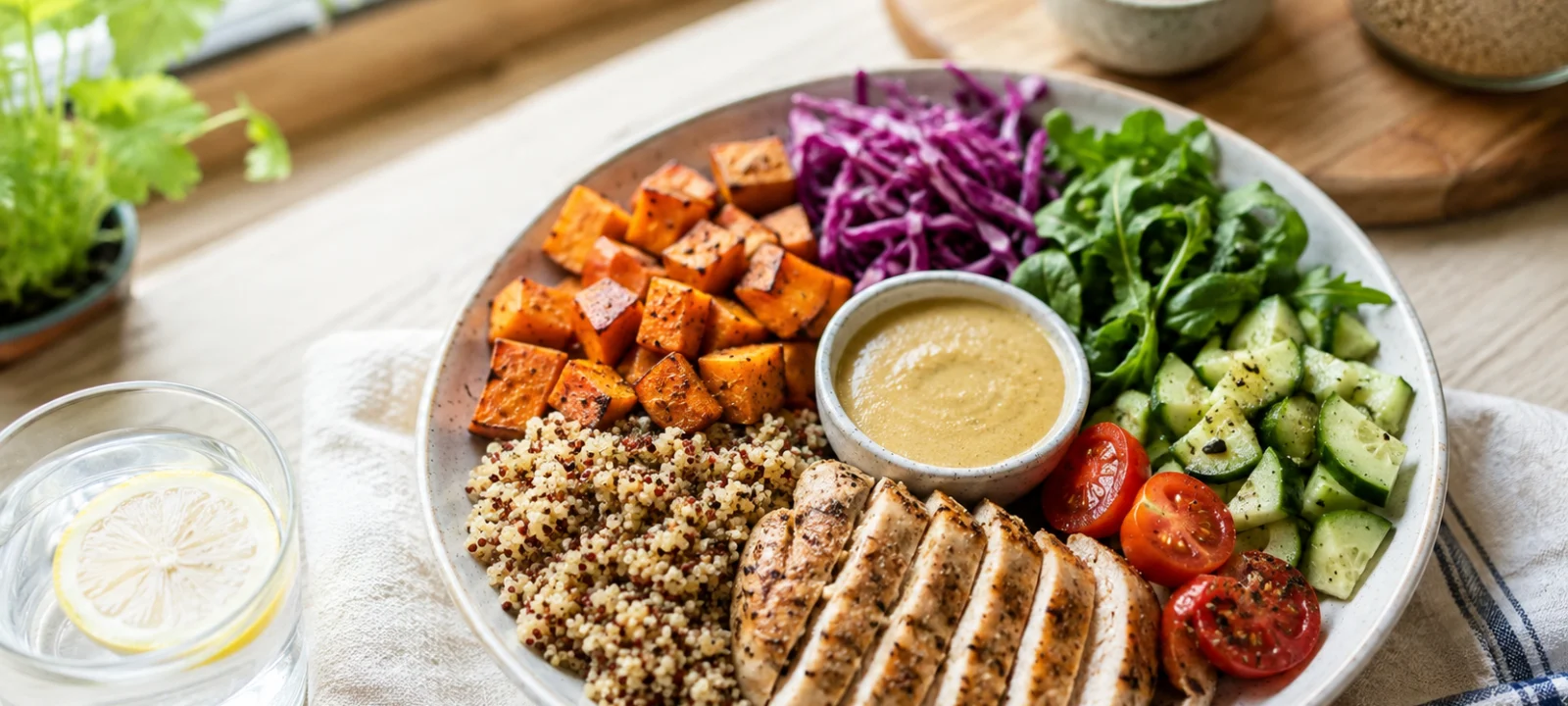
Are Buddha bowls healthy? Yes, when they're built with wholesome ingredients and balanced portions. A healthy Buddha bowl usually contains five key elements: a whole-grain base, lean protein, colorful vegetables, healthy fats, and a light dressing. This combination provides protein for muscle maintenance, fiber for digestive health, healthy fats for satiety, and complex carbohydrates for lasting energy.
One reason Buddha bowls are recommended by many nutrition professionals is that they naturally encourage variety. Instead of focusing on a single food group, they combine multiple nutrient-rich ingredients in one meal. Eating a variety of vegetables, whole grains, and lean proteins helps provide essential vitamins and minerals while making meals more satisfying. Guidance from the USDA MyPlate also emphasizes building meals around vegetables, whole grains, and quality protein sources as part of a balanced eating pattern.
What Makes a Buddha Bowl Healthy?
The health benefits of a Buddha bowl come from its ingredients rather than its name. A balanced bowl contains foods from several nutritional groups, helping you create a complete meal without relying on highly processed ingredients.
Whole Grains for Lasting Energy
Many Buddha bowls include quinoa, brown rice, farro, or barley as their base. Whole grains provide complex carbohydrates that digest more slowly than refined grains, helping you stay energized for longer. They're also naturally higher in fiber, vitamins, and minerals.
Lean Protein for Fullness
Protein is one of the reasons Buddha bowls are so satisfying. Grilled chicken, salmon, tofu, shrimp, eggs, lentils, and chickpeas all help support muscle maintenance while keeping you full between meals.
If you're looking for a delicious example, try our Chicken Buddha Bowl. It combines juicy grilled chicken, quinoa, roasted vegetables, avocado, and a homemade lemon tahini dressing into a balanced high-protein meal that's perfect for lunch, dinner, or meal prep.
Colorful Vegetables for Vitamins and Fiber
One of the biggest nutritional advantages of Buddha bowls is the generous amount of vegetables they include. Ingredients such as broccoli, spinach, carrots, cabbage, cucumber, tomatoes, peppers, and sweet potatoes provide fiber, antioxidants, vitamin C, vitamin A, folate, and potassium. Eating a wide variety of vegetables also supports overall dietary quality and helps increase daily fiber intake. :contentReference[oaicite:1]{index=1}
Healthy Fats That Keep You Satisfied
Healthy fats from avocado, olive oil, pumpkin seeds, sunflower seeds, almonds, walnuts, or sesame seeds make Buddha bowls more satisfying while helping your body absorb fat-soluble vitamins like vitamins A, D, E, and K. When used in moderate amounts, these ingredients contribute flavor and texture without overwhelming the meal.
Protein
Protein from chicken, salmon, tofu, eggs, or legumes helps keep you full and supports muscle health.
Fiber
Vegetables, whole grains, beans, and seeds provide fiber that supports digestion and promotes fullness.
Healthy Fats
Avocado, olive oil, nuts, and seeds add heart-healthy fats while improving flavor and helping absorb fat-soluble vitamins.
Vitamins and Minerals
Colorful vegetables provide essential vitamins, minerals, and antioxidants that support overall health.
Protein
Protein from chicken, salmon, tofu, eggs, or legumes helps keep you full and supports muscle health.
Fiber
Vegetables, whole grains, beans, and seeds provide fiber that supports digestion and promotes fullness.
Healthy Fats
Avocado, olive oil, nuts, and seeds add heart-healthy fats while improving flavor and helping absorb fat-soluble vitamins.
Vitamins and Minerals
Colorful vegetables provide essential vitamins, minerals, and antioxidants that support overall health.
How Many Calories Are in a Buddha Bowl?
Another common question people ask is how many calories a Buddha bowl contains. The answer depends entirely on the ingredients and portion sizes.
A lighter Buddha bowl made with grilled chicken, quinoa, fresh vegetables, avocado, and a homemade dressing typically contains between 450 and 600 calories. Larger restaurant portions or bowls loaded with extra rice, creamy sauces, fried toppings, or multiple dressings can easily exceed 800 calories.
If your goal is healthy weight management, focus on filling half your bowl with vegetables before adding grains and protein. This simple adjustment increases volume without adding excessive calories.
Can Buddha Bowls Help With Weight Loss?
Yes. Are Buddha bowls healthy for weight loss? They certainly can be when they're prepared with balanced portions and nutrient-dense ingredients.
Unlike restrictive diets, Buddha bowls allow you to enjoy every major food group while controlling portion sizes. Meals that combine lean protein, fiber-rich vegetables, whole grains, and healthy fats tend to be more filling, making it easier to avoid overeating later in the day.
To build a Buddha bowl that's better suited for weight loss, consider these simple tips:
- Choose grilled or baked proteins instead of fried options.
- Fill at least half your bowl with colorful vegetables.
- Use whole grains like quinoa or brown rice in moderate portions.
- Add healthy fats such as avocado or pumpkin seeds without overdoing the quantity.
- Use homemade dressings and drizzle them lightly instead of pouring large amounts.
Following these simple habits creates meals that are filling, nutritious, and easier to enjoy consistently as part of a healthy lifestyle.
Homemade vs. Restaurant Buddha Bowls
Homemade Buddha bowls usually offer better nutrition because you control the ingredients, portions, and dressing. They're also ideal for meal prep and often contain less sodium and added sugar than many restaurant versions.
If you're looking for inspiration, try our Chicken Buddha Bowl, made with grilled chicken, quinoa, fresh vegetables, and a homemade lemon tahini dressing.
How to Make Your Buddha Bowl Even Healthier
If you're asking are Buddha bowls healthy, the answer often depends on the choices you make when building your bowl. Even small adjustments can significantly improve the nutritional value without sacrificing flavor.
Start by choosing whole, minimally processed ingredients whenever possible. Fill at least half your bowl with colorful vegetables, include a lean source of protein, add a moderate serving of whole grains, and finish with healthy fats and a light homemade dressing.
Simple swaps can also make a noticeable difference. Replace creamy bottled dressings with tahini, lemon vinaigrette, or olive oil-based dressings. Choose grilled proteins instead of fried options, and use herbs and spices to add flavor without excess sodium.
The goal isn't to make your meal restrictive—it's to create a balanced plate that's enjoyable, satisfying, and packed with nutrients.
- Busy professionals: Great for meal prep and quick weekday lunches.
- Families: Everyone can customize their own bowl with their favorite ingredients.
- Fitness enthusiasts: High-protein versions support muscle recovery after exercise.
- People trying to lose weight: Filling vegetables and lean protein help support portion control.
- Vegetarians and vegans: Plant-based proteins like tofu, lentils, and chickpeas work perfectly.
Because they're so flexible, Buddha bowls can fit into many healthy eating patterns without feeling repetitive.
Frequently Asked Questions
Are Buddha bowls healthy every day?
Yes. Eating Buddha bowls regularly can be part of a healthy diet as long as you vary your ingredients.
Rotating different vegetables, proteins, grains, and healthy fats helps provide a wider range of nutrients while keeping meals interesting.
Can Buddha bowls be high in protein?
Absolutely. Using grilled chicken, turkey, salmon, shrimp, tofu, eggs, or legumes makes it easy to prepare a high-protein Buddha bowl that supports muscle maintenance and keeps hunger under control.
Are Buddha bowls good for meal prep?
Yes. Many ingredients can be prepared in advance and stored separately. Keep dressings and avocado separate until serving to maintain the best texture and freshness throughout the week.
Final Thoughts
So, are Buddha bowls healthy? When they're built with lean protein, colorful vegetables, whole grains, healthy fats, and a balanced dressing, the answer is yes. They're one of the easiest ways to enjoy a nutritious, satisfying meal while supporting a healthy lifestyle.
Whether you're preparing lunches for the week or making a quick dinner, Buddha bowls offer endless flexibility and can easily be adapted to your personal preferences and nutrition goals.
If you're ready to put these ideas into practice, start with our Chicken Buddha Bowl recipe. It's packed with fresh ingredients, over 35 grams of protein per serving, and makes a delicious example of how healthy a well-balanced Buddha bowl can be.
For more evidence-based healthy eating guidance, visit the USDA MyPlate, which offers practical recommendations for building balanced meals with vegetables, whole grains, lean protein, and healthy fats.