
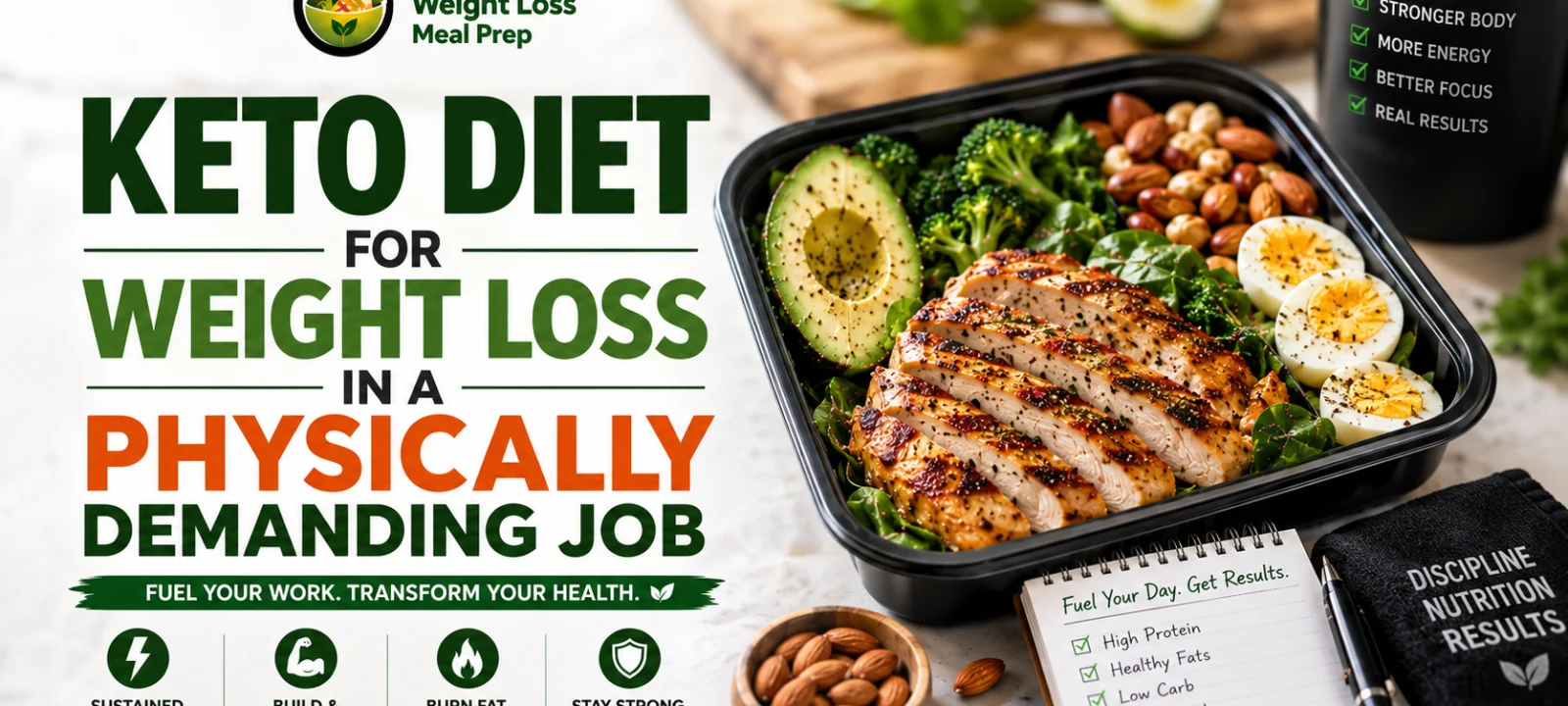
Keto Diet for Weight Loss in a Physically Demanding Job
Working in construction, warehousing, nursing, landscaping, delivery, manufacturing, or another active occupation changes the way you should approach dieting. A keto diet for weight loss may be possible, but the plan must support long shifts, lifting, walking, heat exposure, concentration, and workplace safety. Simply cutting carbohydrates as low as possible and hoping your body adapts is not a smart strategy.
Keto restricts carbohydrate enough to make the body rely more heavily on fat and ketones. It may help some people control appetite and lose weight, but it does not automatically improve performance. Research generally finds ketogenic diets neutral or sometimes detrimental for athletic performance compared with higher-carbohydrate diets, particularly during repeated high-intensity effort. Research on ketogenic diets and physical performance.
Can You Do Keto While Working a Physical Job?
Yes, some people can.
A delivery driver who walks throughout the day may tolerate keto differently from a roofer working in summer heat or a warehouse employee moving heavy loads. Steady, lower-intensity activity relies more readily on fat, while sudden bursts of hard work depend more on rapidly available carbohydrate.
The real question is whether you can work safely, think clearly, recover properly, and maintain strength. If the diet makes you dizzy, weak, unusually slow, or mentally foggy, strict keto may be the wrong tool.
How Keto Changes Workday Energy
Carbohydrates are broken down into glucose and stored as glycogen in the liver and muscles. Glycogen is useful when you need quick energy for climbing, carrying, pushing, or repeated heavy lifting. Learn more about carbohydrates and energy.
When carbohydrates are severely restricted, fat oxidation and ketone production increase. Fat can provide substantial energy, but it may not support high-intensity output as efficiently as carbohydrate. Studies consistently show increased fat burning on keto, yet performance benefits remain uncertain, and movement economy may worsen in some demanding activities. Review the research on keto and exercise performance.
Expect an Adaptation Period
The first days or weeks can be difficult. Reduced carbohydrate intake lowers glycogen, and glycogen storage is associated with body water. Early weight loss therefore includes water, not only body fat. Read about early weight changes on low-carbohydrate diets.
Some people experience headaches, tiredness, constipation, reduced work capacity, or light-headedness. Starting strict keto immediately before overtime or hot-weather work is poor timing.
Choose a Lower-Risk Starting Period
Begin during lighter duties, scheduled leave, or a week with fewer demanding shifts. Avoid combining the transition with fasting, severe calorie restriction, and extra exercise.
Reduce Carbohydrates Gradually if Necessary
A gradual reduction may be more practical than dropping abruptly to a very low intake. You may discover that moderate carbohydrate restriction controls appetite without harming performance.
Keto Diet for Weight Loss: Protect Work Capacity
Weight loss requires an energy deficit, but a large deficit can be risky when your job already burns substantial energy. Under-eating may reduce concentration, reaction time, strength, and recovery.
Set a moderate pace. Track scale weight alongside your ability to complete normal tasks. If productivity, grip strength, alertness, mood, or recovery steadily declines, the plan is too aggressive even if the scale is moving.
A practical plan protects muscle and produces progress you can maintain. Review weight trends weekly instead of reacting to every daily fluctuation.
Eat Enough Protein
Protein supports muscle repair, preserves lean mass, and improves fullness. A recent review found that ketogenic weight-loss interventions may reduce lean body mass when resistance training and adequate dietary planning are missing. Explore the evidence on keto and lean body mass.
Build meals around eggs, chicken, fish, lean meat, Greek yogurt, cottage cheese, tofu, or tempeh.
Keto should be low in carbohydrate, not low in protein or unlimited in calories.
Choose Better Fat Sources
“High fat” should not become an excuse to live on processed meat, butter, cream, and fried foods.
Use more olive oil, avocado, nuts, seeds, oily fish, and eggs. Include non-starchy vegetables for fiber, potassium, folate, vitamin C, and meal volume. Current dietary guidance emphasizes nutrient-dense foods and reducing highly processed products rather than focusing only on one macronutrient. View the current dietary guidelines.
Hydration and Electrolytes Matter
Carbohydrate restriction, sweating, heat, protective clothing, and prolonged activity can create a difficult combination. Thirst, headache, cramps, unusual fatigue, rapid heartbeat, and dizziness may signal inadequate fluid intake, excessive loss, or another medical problem.
Drink Consistently
Drink across the shift rather than consuming a large amount at once. Persistently dark urine may indicate that you need more fluid, although medicines and supplements can affect color.
Do Not Guess With Supplements
Sodium, potassium, and magnesium products are widely promoted for keto, but more is not automatically safer. Needs vary with sweat loss, climate, medicines, kidney function, and blood pressure. People taking diuretics or medicines affecting potassium should seek professional advice before supplementing.
Plan Work-Friendly Meals
The diet is more likely to fail when only convenience foods are available. Prepare food before your shift.
A practical meal could include chicken, salad, olive oil dressing, and avocado. Portable options include boiled eggs, tuna with cucumber, Greek yogurt with nuts, cheese with vegetables, or leftover beef with roasted cauliflower.
Keep an emergency meal or snack available, but avoid constant snacking.
What About Carbohydrates Around Hard Shifts?
Strict keto is not the only valid low-carbohydrate approach. Some workers perform better with a controlled amount of carbohydrate before or during strenuous duties. Sports-nutrition guidance continues to recognize carbohydrate as important during prolonged or demanding activity. Read sports-nutrition guidance for active individuals.
A measured portion of fruit, oats, rice, potato, or beans near the hardest part of the day may help. It may reduce or interrupt ketosis, but safe performance matters more than a ketone reading.
If a small amount of carbohydrate improves strength, coordination, or alertness, that is useful information—not failure.
Warning Signs the Plan Is Not Working
Do not push through symptoms merely because online communities call them normal. Seek medical attention for fainting, confusion, chest pain, persistent vomiting, severe weakness, breathing difficulty, or symptoms of dangerously low blood sugar.
Reassess the diet if you have repeated dizziness while lifting or climbing, worsening concentration around machinery or driving, persistent loss of strength, uncontrolled cravings, poor recovery, or rapid weight loss accompanied by weakness.
A diet that creates a workplace safety risk is not successful.
Who Should Get Medical Advice First?
Speak with a qualified professional before starting if you have diabetes, kidney or liver disease, a history of eating disorders, gallbladder or pancreatic problems, are pregnant or breastfeeding, or take medicines affecting blood sugar, blood pressure, or fluid balance.
This is particularly important for people using SGLT2 inhibitors, medicines that change how the kidneys handle glucose and are associated with a risk of ketoacidosis. Learn about SGLT2 inhibitors and ketoacidosis risk.
Never reduce prescribed medication because your carbohydrate intake changed unless your clinician instructs you to do so.
A Practical Two-Week Setup
Before Day One
Record your weight, waist, work energy, sleep, and usual meals. Prepare repeatable breakfasts, packed lunches, and dinners. Arrange easy protein sources and vegetables before removing familiar carbohydrate foods.
During Week One
Eat regular meals, avoid a severe calorie deficit, and monitor energy during different tasks. Keep hydration consistent. Do not add demanding workouts merely to accelerate weight loss.
During Week Two
Review whether you remain alert, capable of normal tasks, and able to manage hunger. If symptoms improve, continue cautiously. If performance remains poor, increase calories, reconsider carbohydrate intake, or choose a less restrictive plan.
Is Keto Better Than a Balanced Calorie Deficit?
Not necessarily. Keto is useful when it reduces hunger, simplifies choices, and helps you maintain a calorie deficit. It is not superior when it makes work harder, limits food variety, encourages excessive saturated fat, or causes overeating after strict restriction.
Research on endurance and strength is mixed, while broader evidence suggests keto often produces neutral or negative performance outcomes compared with higher-carbohydrate diets. Review the available evidence on keto and performance.
A Mediterranean-style diet, moderate low-carbohydrate plan, or conventional calorie deficit may deliver similar results with better job performance. The best approach is one you can follow without sacrificing health, safety, or strength.
Final Answer
You can follow a keto diet for weight loss while doing a physically demanding job, but strict ketosis should never outrank safe performance. Start at a sensible time, avoid an extreme calorie deficit, prioritize protein and minimally processed foods, plan meals, manage hydration, and monitor strength and alertness.
Treat work performance as essential feedback. If you adapt and feel steady, the approach may suit you. If you remain weak, dizzy, slow, or unable to recover, use more carbohydrate or choose a less restrictive diet. Sustainable fat loss should make life healthier—not make every shift harder.