
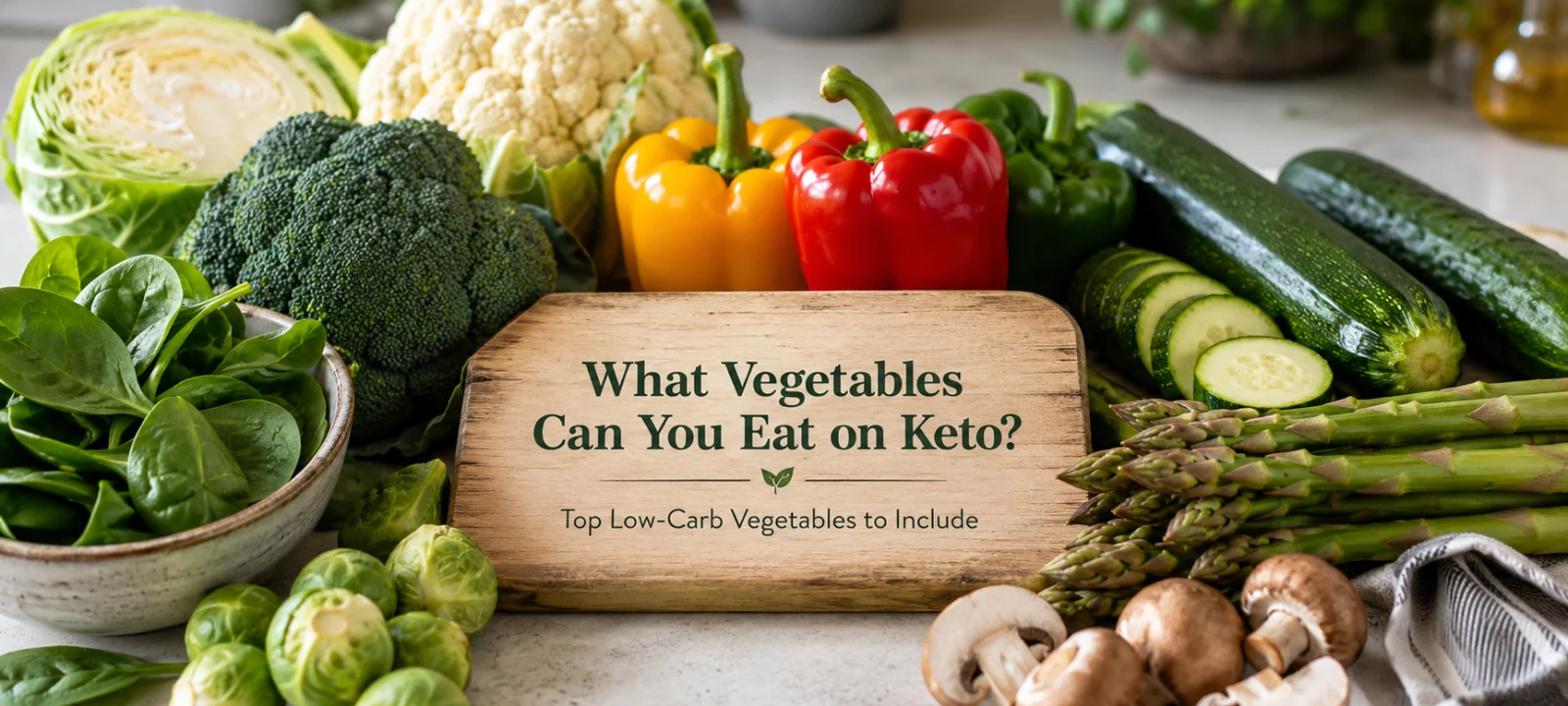
What Vegetables Can You Eat on Keto? Top Low-Carb Vegetables to Include
If you've recently started a ketogenic diet, you may be wondering, "What vegetables can you eat on keto?" While vegetables are an important part of a healthy eating plan, not all of them are equally suitable for a low-carb lifestyle. Some are naturally low in carbohydrates, while others contain enough starch to make staying in ketosis more challenging.
The good news is that there are plenty of delicious, nutrient-rich vegetables you can enjoy on keto. Leafy greens, cruciferous vegetables, and several other low-carb options provide vitamins, minerals, antioxidants, and fiber without significantly increasing your daily carbohydrate intake.
Table of Contents
Why Vegetables Matter on Keto
Vegetables play an important role in a ketogenic diet because they provide essential nutrients while keeping your meals balanced and satisfying. They're rich in vitamins, minerals, antioxidants, and fiber, all of which support overall health.
Many low-carb vegetables are also naturally low in calories, making them an excellent choice if you're following keto for weight management. Fiber-rich vegetables can help you feel full for longer and support healthy digestion.
Can You Eat Vegetables on Keto?
Yes! In fact, vegetables should be a regular part of most ketogenic meal plans. The goal isn't to avoid vegetables—it's to choose the right ones.
Leafy greens, cruciferous vegetables, and many above-ground vegetables are naturally low in net carbohydrates and fit perfectly into a keto lifestyle. These vegetables allow you to enjoy flavorful, colorful meals while staying within your daily carb target.
If you've already learned about keto-friendly fruits, don't miss our article on What Fruits Can You Eat on Keto?. It pairs perfectly with this guide and helps you choose the best low-carb produce for your meals.
What Vegetables Can You Eat on Keto? Top Low-Carb Vegetables to Include
The vegetables below are among the best options for anyone following a ketogenic diet. They're nutritious, versatile, and naturally low in carbohydrates.
1. Spinach
Spinach is one of the healthiest vegetables you can eat on keto. It's packed with vitamins A, C, and K, along with iron, magnesium, and antioxidants, while containing very few carbohydrates.
- Approximately 1g net carbs per 100g
- Rich in vitamins and minerals
- Excellent source of iron
- Perfect for salads, omelets, and smoothies
Fresh spinach can be eaten raw in salads or lightly sautéed with olive oil and garlic for a simple keto side dish.
2. Broccoli
Broccoli is another keto-friendly favorite. It's loaded with fiber and vitamin C while remaining low enough in carbohydrates to fit comfortably into most ketogenic meal plans.
- Approximately 4g net carbs per 100g
- High in vitamin C
- Excellent source of fiber
- Great roasted, steamed, or stir-fried
Roasted broccoli with olive oil, parmesan cheese, and garlic makes a delicious low-carb side dish.
3. Cauliflower
Cauliflower is one of the most versatile vegetables on keto. It can replace high-carb foods like rice, mashed potatoes, and even pizza crust, making it a staple in many low-carb kitchens.
- Approximately 3g net carbs per 100g
- Rich in vitamin C
- High in fiber
- Excellent substitute for rice and potatoes
Whether mashed, roasted, or grated into cauliflower rice, this vegetable offers countless ways to enjoy satisfying keto meals.
4. Zucchini
Zucchini is a staple in many keto kitchens because it's incredibly versatile and naturally low in carbohydrates. Its mild flavor makes it easy to include in a variety of meals without overpowering other ingredients.
- Approximately 2g net carbs per 100g
- Low in calories
- Good source of vitamin C
- Perfect for zoodles, casseroles, and stir-fries
One of the most popular ways to enjoy zucchini on keto is by turning it into zucchini noodles, often called "zoodles," as a low-carb alternative to traditional pasta.
5. Bell Peppers
Bell peppers add color, crunch, and natural sweetness to keto meals without contributing excessive carbohydrates. Green bell peppers are the lowest in carbs, while red, yellow, and orange peppers contain slightly more natural sugar.
- Approximately 4–6g net carbs per 100g
- Excellent source of vitamin C
- Rich in antioxidants
- Great for salads, fajitas, and stuffed peppers
Slice fresh bell peppers for a crunchy snack or roast them to bring out their natural sweetness.
6. Cucumbers
Cucumbers are refreshing, hydrating, and one of the easiest vegetables to fit into a ketogenic diet. Because they're made up mostly of water, they contain very few carbohydrates while adding texture and freshness to meals.
- Approximately 3g net carbs per 100g
- High water content
- Low in calories
- Ideal for salads and healthy snacks
Pair cucumber slices with cream cheese, guacamole, or your favorite keto dip for a simple snack.
7. Mushrooms
Mushrooms are another excellent choice for keto because they're low in carbohydrates while providing a rich, savory flavor. They work well in breakfast dishes, soups, stir-fries, and grilled meals.
- Approximately 3g net carbs per 100g
- Low in carbohydrates
- Contains B vitamins
- Rich, satisfying flavor
Try sautéing mushrooms with butter, garlic, and fresh herbs for a quick keto side dish.
8. Asparagus
Asparagus is a nutrient-dense vegetable that's naturally low in carbohydrates and high in fiber. It's especially delicious when roasted with olive oil and parmesan cheese.
- Approximately 2g net carbs per 100g
- Rich in folate
- High in fiber
- Perfect roasted or grilled
Asparagus pairs beautifully with grilled chicken, steak, salmon, or eggs, making it a versatile addition to keto meal prep.
9. Cabbage
Cabbage is an affordable and versatile vegetable that works well in soups, stir-fries, salads, and low-carb wraps. It's packed with fiber and nutrients while remaining keto-friendly.
- Approximately 3g net carbs per 100g
- Rich in vitamin C
- Good source of fiber
- Excellent for meal prep
Use cabbage as the base for coleslaw, sauté it with butter, or add it to soups for extra texture and nutrition.
10. Brussels Sprouts
Brussels sprouts contain slightly more carbohydrates than leafy greens, but moderate portions can still fit into many ketogenic meal plans. They're rich in fiber and become wonderfully flavorful when roasted.
- Approximately 5g net carbs per 100g
- High in vitamin K
- Rich in antioxidants
- Best enjoyed roasted
Roast Brussels sprouts with olive oil, garlic, and crispy bacon for a delicious keto-friendly side dish.
Vegetables to Limit on Keto
While vegetables are an essential part of a healthy diet, some contain significantly more carbohydrates than others. These higher-carb vegetables can quickly use up your daily carb allowance, especially if eaten in large portions.
If your goal is to stay in ketosis, it's best to enjoy these vegetables only occasionally and in smaller servings.
- Potatoes
- Sweet potatoes
- Corn
- Peas
- Parsnips
- Beets (large portions)
- Winter squash
Keto Vegetable Carb Comparison
| Vegetable | Approximate Net Carbs (per 100g) | Keto Friendly? |
|---|---|---|
| Spinach | 1g | ✅ Yes |
| Zucchini | 2g | ✅ Yes |
| Asparagus | 2g | ✅ Yes |
| Cauliflower | 3g | ✅ Yes |
| Cabbage | 3g | ✅ Yes |
| Cucumber | 3g | ✅ Yes |
| Broccoli | 4g | ✅ Yes |
| Brussels Sprouts | 5g | ✅ Yes (Moderation) |
| Potatoes | 17g+ | ❌ No |
| Corn | 16g+ | ❌ No |
Tips for Eating Vegetables on Keto
Adding vegetables to your ketogenic diet doesn't have to be complicated. With a little planning, you can enjoy a wide variety of flavorful, nutrient-rich vegetables while staying within your daily carbohydrate limit.
- Prioritize leafy greens such as spinach, kale, and lettuce.
- Choose above-ground vegetables more often than root vegetables.
- Measure portions if you're closely tracking your daily net carbs.
- Cook vegetables with healthy fats like olive oil, butter, or avocado oil for extra flavor and satiety.
- Experiment with cauliflower rice, zucchini noodles, and cabbage wraps as low-carb substitutes for rice, pasta, and tortillas.
- Buy seasonal vegetables to enjoy better flavor and value throughout the year.
Remember that variety is important. Eating different vegetables throughout the week helps you get a broader range of vitamins, minerals, and antioxidants while keeping your meals interesting.
Find More Keto Inspiration
If you're planning your weekly meals, don't forget that fruit choices matter too. Read our article on What Fruits Can You Eat on Keto? to discover the best low-carb fruits that pair perfectly with the vegetables in this guide.
Looking for more keto recipes, healthy meal prep ideas, and printable food inspiration? Follow us on Pinterest, where we regularly share easy low-carb recipes, meal prep tips, and healthy eating inspiration.
For more information about the ketogenic diet, including potential benefits and considerations, visit this evidence-based resource from Harvard Health.
Frequently Asked Questions
Can you eat vegetables every day on keto?
Yes. In fact, low-carb vegetables should be a regular part of most ketogenic meal plans because they provide fiber, vitamins, minerals, and antioxidants while helping you stay satisfied.
Which vegetables have the lowest carbs?
Spinach, zucchini, asparagus, cauliflower, cabbage, cucumbers, and mushrooms are among the lowest-carb vegetables commonly enjoyed on a ketogenic diet.
Final Thoughts
If you've been wondering "What vegetables can you eat on keto?", you'll be happy to know that there are plenty of delicious options to choose from. Spinach, broccoli, cauliflower, zucchini, mushrooms, cabbage, cucumbers, asparagus, and many other low-carb vegetables can all be part of a healthy ketogenic lifestyle.