Keto Diet Plan for Weight Loss: Complete Beginner's Guide (2026)
A keto diet plan can be a simple way to lose weight when it is built around whole foods, low-carb vegetables, healthy fats, and enough protein. Instead of depending mostly on bread, rice, pasta, cereal, or sugar for energy, keto trains the body to use fat as fuel. This change may help reduce cravings, control hunger, and make daily meals easier to plan. It is also helpful because the rules are clear: reduce sugar and starch, choose filling foods, and repeat meals that work for your schedule, budget, and taste preferences, without relying on perfect cooking skills or expensive ingredients daily.
For beginners, the goal is not to make the diet complicated. You do not need expensive products or difficult recipes. You need a clear food list, a basic understanding of ketosis, and a realistic meal routine you can follow consistently. This guide explains how a keto diet plan works, what to eat, what to avoid, and how to use it for weight loss in a practical way.
What Is a Keto Diet Plan?
A keto diet plan is a low-carbohydrate, high-fat eating pattern. The body normally uses glucose from carbohydrates as its main energy source. When carbs are reduced, the liver starts producing ketones from fat. These ketones become another source of fuel for the body and brain.
This metabolic state is called ketosis. Most keto plans keep daily net carbs between 20 and 50 grams. The exact number can vary based on activity level, metabolism, age, and personal goals. A common keto macro split is around 70 percent fat, 20 to 25 percent protein, and 5 to 10 percent carbohydrates.
According to the Mayo Clinic, the ketogenic diet reduces carbohydrate intake and replaces it with fat, encouraging the body to burn fat for energy.
How Ketosis Works
Ketosis begins when carbohydrate intake becomes low enough that the body has less glucose available. To meet energy needs, the liver breaks down fat and creates ketones. Once ketones rise, the body starts relying more on fat as fuel.
Many beginners enter ketosis within a few days, but some may need one to two weeks. During the first week, you may feel tired, thirsty, or notice headaches. This is often called the keto flu. Drinking enough water, adding electrolytes, eating enough protein, and not cutting calories too aggressively can make the transition smoother.
Benefits of a Keto Diet Plan
Supports Weight Loss
The main reason people start a keto diet plan is weight loss. Low-carb meals can reduce hunger and make it easier to eat fewer calories without feeling constantly deprived. When the body is in ketosis, it also becomes more efficient at using fat for energy.
Helps Control Cravings
Meals that include protein, healthy fats, and low-carb vegetables are filling. This can help reduce cravings for sweets, chips, and processed snacks. Many people find that once sugar intake drops, their appetite becomes easier to manage.
Improves Meal Structure
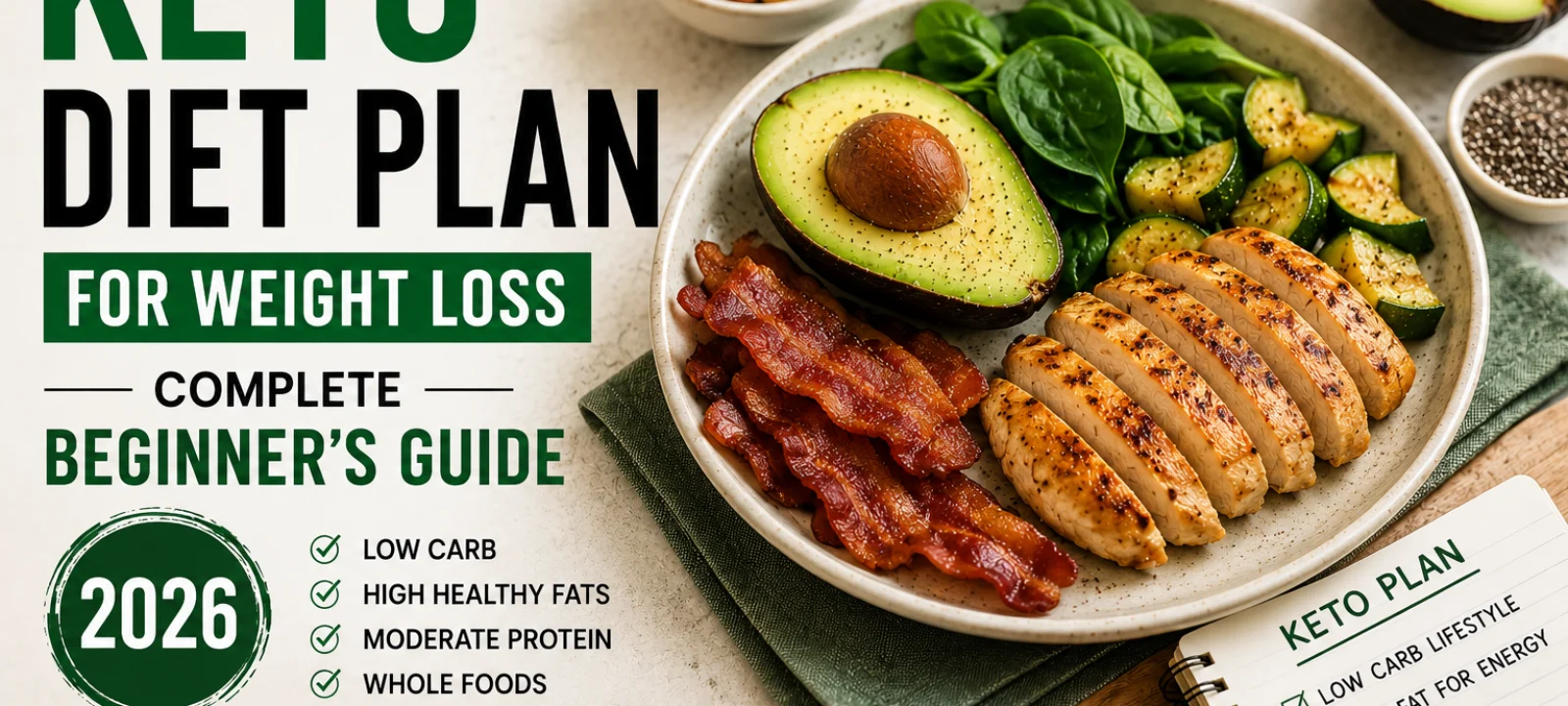
Keto makes food choices clearer. A plate can be built with protein, vegetables, and fat. For example, eggs with spinach, chicken salad with avocado, or salmon with broccoli can all fit into a beginner keto plan.
Foods to Eat on a Keto Diet Plan
Protein Sources
- Eggs
- Chicken
- Turkey
- Salmon
- Tuna
- Shrimp
- Lean beef
- Ground beef
Healthy Fats
- Avocados
- Olive oil
- Coconut oil
- Butter
- Ghee
- Olives
- Nuts
- Seeds
Low-Carb Vegetables
- Spinach
- Broccoli
- Cauliflower
- Zucchini
- Cucumber
- Lettuce
- Bell peppers
- Asparagus
Dairy Options
- Cheese
- Heavy cream
- Unsweetened Greek yogurt
- Cottage cheese
- Cream cheese
Foods to Avoid on a Keto Diet Plan
To stay in ketosis, limit foods that are high in sugar, starch, or refined carbohydrates. These foods can quickly raise your carb intake and make it harder to follow the plan.
- Bread
- Rice
- Pasta
- Cereal
- Cakes
- Cookies
- Candy
- Sugary drinks
- Potatoes
- Corn
- Fruit juice
- Sweetened yogurt
Packaged foods can also contain hidden sugar, flour, or starch. Always read labels, especially on sauces, dressings, protein bars, and flavored drinks.
Smart Grocery Shopping Tips
Shopping with a list makes keto easier. Focus on simple foods you can use in several meals. Eggs, chicken, tuna, salad greens, broccoli, cauliflower, avocado, cheese, olive oil, and nuts are useful staples.
- Plan three to four main meals before shopping.
- Buy low-carb vegetables every week.
- Choose unsweetened drinks and dairy products.
- Keep quick protein options ready for busy days.
Simple Keto Plate Method
If counting every macro feels stressful, use a simple plate method. Fill half your plate with low-carb vegetables, one quarter with protein, and the remaining space with healthy fat. For example, you might choose grilled chicken, spinach, cucumber, avocado, and olive oil dressing. This approach keeps meals balanced without turning every meal into a math problem. It also helps beginners avoid two common mistakes: eating only fat or skipping vegetables. Keto should still include fiber, minerals, and colorful foods. When your plate has protein, vegetables, and fat together, you are more likely to feel satisfied and stay consistent.
Keto Meal Prep for Better Results
Meal prep helps you stay consistent with a keto diet plan. When food is already prepared, you are less likely to order fast food or reach for high-carb snacks. You can cook chicken, boil eggs, wash salad greens, roast vegetables, and portion snacks ahead of time.
A simple prep routine may include two proteins, two vegetables, one sauce, and one snack option. For a deeper guide, read our Keto Meal Prep for Weight Loss: Complete Guide.
Sample Keto Meal Ideas
Instead of following a strict meal plan, beginners can rotate easy meals. This keeps the diet flexible while still supporting weight loss.
- Breakfast: Scrambled eggs with avocado and spinach.
- Lunch: Grilled chicken salad with olive oil dressing.
- Dinner: Baked salmon with broccoli and butter.
- Snack: Cheese cubes, boiled eggs, cucumber, or olives.
You can repeat these meals or change the protein and vegetables. The important thing is keeping carbs low and meals satisfying.
Healthy Keto Snack Ideas
Snacks are optional, but they can help when hunger hits between meals. Choose snacks with protein or fat instead of sugar.
- Boiled eggs
- Cheese cubes
- Mixed nuts
- Celery with almond butter
- Olives
- Avocado slices
Common Keto Diet Mistakes
Some beginners struggle because they only focus on cutting carbs and forget the rest of the diet. Keto works better when meals are balanced and realistic.
- Eating too many hidden carbohydrates
- Not drinking enough water
- Eating too little protein
- Avoiding vegetables completely
- Depending on processed keto snacks
- Not planning meals ahead
Tips for Long-Term Keto Success
- Start with simple meals you already enjoy.
- Track net carbs during the first few weeks.
- Drink water and include electrolytes.
- Choose whole foods more often than packaged keto products.
- Get enough sleep and stay active.
- Prepare meals before busy days.
The Harvard T.H. Chan School of Public Health notes that food quality matters with any diet pattern. A healthy keto approach should focus on nutrient-dense foods, not only carb restriction.
Frequently Asked Questions
How many carbs can I eat on a keto diet plan?
Most people eat 20 to 50 grams of net carbs per day on keto. Beginners often start lower to enter ketosis faster. Net carbs are usually calculated by subtracting fiber from total carbohydrates.
Can beginners follow keto?
Yes. Beginners can follow keto successfully by keeping meals simple. Start with eggs, chicken, fish, low-carb vegetables, avocado, olive oil, cheese, and nuts. Avoid making the first week too complicated.
Is fruit allowed on keto?
Most fruits are high in natural sugar, so portions should be limited. Small amounts of berries, such as strawberries, raspberries, or blackberries, may fit into a keto diet plan.
How long does it take to enter ketosis?
Some people enter ketosis in a few days, while others need one to two weeks. Carb intake, exercise, sleep, hydration, and consistency can all affect the timeline.
Can I exercise while following keto?
Yes, but energy may feel lower during the first week. Light walking, strength training, and moderate workouts can be useful while your body adapts to using fat for fuel.
What are net carbs?
Net carbs are total carbohydrates minus fiber. Many keto beginners track net carbs because fiber does not affect blood sugar in the same way as sugar or starch.
How much weight can I lose on keto?
Weight loss varies. Some people lose water weight quickly at first, but long-term fat loss depends on calories, food quality, activity level, sleep, and consistency.
Conclusion
A keto diet plan can support weight loss when it is based on whole foods, healthy fats, enough protein, and low-carb vegetables. The best plan is simple enough to follow, flexible enough for real life, and focused on consistency instead of perfection.
Start with basic meals, prepare food ahead of time, drink enough water, and avoid hidden carbs. With the right approach, keto can become a practical eating pattern that helps you stay full, reduce cravings, and work toward your weight loss goals.